
Blog card value
1st Edition Pokemon Cards: How to Spot One Fast
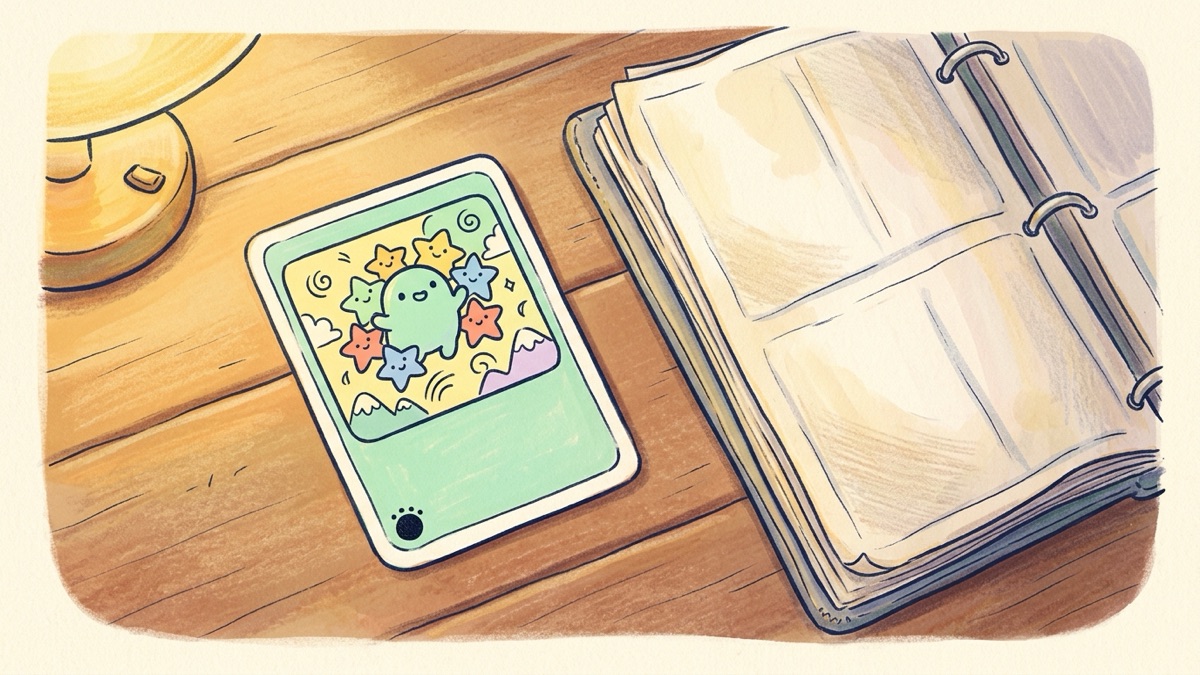
You flip through an old binder and spot a tiny black circle on the left side of a card. Your heart does a little hop. Is this a real 1st Edition Pokemon card, and is it the kind that is worth money? Here is how to check fast, what the stamp does and does not tell you, and how to avoid fakes.
Quick answer
A 1st Edition Pokemon card has a small black "Edition 1" stamp. On Pokemon cards it sits on the left side, just under the picture. English 1st Edition runs exist only for ten Wizards of the Coast sets, from Base Set (1999) to Neo Destiny (2002). No stamp means a later print, such as Shadowless or Unlimited.
Key takeaways
- The stamp is a "1" on a solid black circle with the word EDITION arching over the top. On Pokemon cards it sits on the left, just below the art box.
- Ten English sets had 1st Edition runs, from Base Set to Neo Destiny. Base Set 2, Legendary Collection and every set after them did not.
- Only Base Set has three prints to tell apart: 1st Edition, then Shadowless, then Unlimited.
- Fake stamps are real. Check the ink color, shine, sharpness and position before you pay.
- The stamp is a head start, not a price. The exact card and its condition still decide what it is worth.
What does the 1st Edition stamp look like?
CGC describes the English stamp as the number "1" on a solid black circle, with the word EDITION in capital letters arching around the top. It is small, black and neat, and on a real card it looks like part of the printing, because it was printed with the card during the original run.
The same symbol also appears on 1st Edition booster packs and boxes. So if you still have the wrapper from 1999, it can help you date the pack.
Japanese cards use a different mark: a large "1" sitting on top of the word EDITION. Japanese 1st Edition runs began in 2001 and continued until the 20th Anniversary set in 2016. For many of those Japanese sets, the Unlimited print was the smaller one, so a Japanese 1st Edition mark does not automatically mean "rarer".
Where is the stamp on a 1st Edition card?
Where you look depends on the kind of card:
- Pokemon cards: on the left side, just below the bottom corner of the art box, roughly halfway down the card.
- Trainer cards: at the bottom left.
- Energy cards: in the top right corner.
On most sets, the stamp sits on the opposite side from the set symbol, which appears on the right just under the picture. Base Set cards have no set symbol at all, so on a 1st Edition Base Set card the stamp is the only mark in that spot.

Which Pokemon sets have 1st Edition cards?
Wizards of the Coast printed 1st Edition runs for every English set from Base Set up to and including Neo Destiny, except the reprint set Base Set 2. That makes ten sets across about three years.
| Set | English release | 1st Edition run? |
|---|---|---|
| Base Set | January 1999 | Yes |
| Jungle | June 1999 | Yes |
| Fossil | October 1999 | Yes |
| Base Set 2 | February 2000 | No, reprint set |
| Team Rocket | April 2000 | Yes |
| Gym Heroes | August 2000 | Yes |
| Gym Challenge | October 2000 | Yes |
| Neo Genesis | December 2000 | Yes |
| Neo Discovery | June 2001 | Yes |
| Neo Revelation | September 2001 | Yes |
| Neo Destiny | February 2002 | Yes, the last one |
| Legendary Collection | May 2002 | No, reprint set |
| Expedition and later | September 2002 on | No |
Why did it stop? Bulbapedia points to release pressure in the Neo years. Some late 1st Edition runs came out alongside or even after their Unlimited release, which took away the point of a "first" print. Expedition became the first new English set with no 1st Edition run, and the idea was dropped for good after Wizards' license ended in 2003.
Fun fact
Jungle's 1st Edition print run accidentally included a 1st Edition version of a Black Star Promo Pikachu, a card that was never meant to carry the stamp. It is one of the stranger surprises of the Wizards years.
1st Edition vs Shadowless vs Unlimited: what is the difference?
Only English Base Set has a middle print called Shadowless. It kept almost everything about the 1st Edition layout and removed only the stamp. The Unlimited print that followed added a drop shadow and bolder text.
| Feature | 1st Edition | Shadowless | Unlimited |
|---|---|---|---|
| Edition 1 stamp | Yes | No | No |
| Drop shadow beside the art box | No | No | Yes |
| HP and attack text | Thin | Thin | Bolder |
| Print order | First | Second | Third |
| Collector demand, same card and condition | Usually highest | Usually in between | Usually lowest |
To check the shadow, look at the right edge of the picture window. A Shadowless or 1st Edition Base Set card has a clean edge there. An Unlimited card has a soft gray shadow along the right side.
Trainer and Energy cards have no picture window, so check the copyright line at the bottom instead. Shadowless cards read "1995, 96, 98, 99 Nintendo", while Unlimited cards drop the "99". A later Unlimited print carries an updated 1999-2000 copyright line.
For the other nine sets there is no Shadowless print, so the question is simpler: stamp or no stamp.
Is every 1st Edition card worth a lot?
No, and it helps to know this before you get excited. Bulbapedia notes that 1st Edition cards are typically worth more than their Unlimited versions, but the late Neo-era runs that came out alongside Unlimited are much less valuable than early ones. Base Set 1st Edition cards are regarded as the most valuable.
A few more reality checks:
- Commons and uncommons had stamps too. A stamped common in played condition is still a common.
- Machamp is a special case. Base Set's 1st Edition holo Machamp was included in the first starter decks, so the stamp on that card is not the rarity signal it is on other holos.
- Variants matter. Base Set Pikachu comes with red cheeks or yellow cheeks in the 1st Edition and Shadowless prints, and the red-cheek version is generally considered more valuable by collectors.
How do you spot a fake 1st Edition stamp?
Because the stamp adds value, some people add fake ones to genuine Unlimited cards. In April 2025, CGC reported altered Italian cards with 1st Edition stamps added by laser printing. Earlier, in June 2022, it flagged fake stamps added to ordinary Pikachu cards to imitate the Ghost Stamp error.
Here is what CGC's graders pointed to, turned into checks you can do at home:
- Color and shine. Tilt the card under a bright light. A genuine stamp matches the card's other black ink. A fake can look too dull, too glossy or slightly off in color.
- Height. Look across the card at a low angle. The fakes CGC found were printed on top of the glossy surface, so they sat slightly raised.
- Edges. Zoom in with your phone. A real stamp has crisp edges. Fuzzy, mottled edges or tiny specks of overspray around it are red flags.
- Position. Compare with photos of a graded copy of the same card. A stamp that sits too far left, too high or crooked is suspicious.
- The holo. Running a card through a printer can leave small creases, which CGC said were easiest to see in the holofoil.
- The shadow test. Every 1st Edition Base Set card was printed in the shadowless layout. A Base Set card with both a stamp and a drop shadow should set off alarm bells.
Heads up
Buying a valuable raw 1st Edition card online? Ask for sharp, angled photos of the stamp and the back. For expensive cards, many collectors prefer copies already authenticated and graded, then look the certification number up on the grading company's own website.

Why does condition still matter on a 1st Edition card?
The stamp tells you which print you have. Condition tells you what that print is worth. A 1st Edition card with white specks along the back edges, soft corners or a crease will sell for far less than a clean copy of the same card.
Before you look up prices, check the corners, edges, surface and centering under a good light. Our Pokemon card condition guide explains the five marketplace labels, from Near Mint to Damaged, and how to check each flaw at home.
If the card looks clean, centering becomes the big question for a high grade. PSA's top grade, the 10, allows about 55/45 centering on the front. The PSA grading scale guide covers every grade, and a quick measurement with the free card centering calculator tells you where your borders stand.
How do you check what a 1st Edition card is worth?
Match everything. Search sold listings for the same card name, number and set, the same edition (1st Edition, not Shadowless or Unlimited), the same holo or non-holo version, and the same condition or grade. Mixing those up is the most common way people over or under price a vintage card.
Then decide whether grading is worth it. As of September 2026, PSA's Standard service costs $59.99 per card and covers cards with a value up to $1,000, and higher-value cards need pricier tiers. A slab also makes a 1st Edition card easier to sell, because the stamp has been checked by the grader. Read is my card worth grading? before you pack anything, and see what Pokemon cards are worth money for the other eleven value clues.
Try it
Put the raw value, a realistic graded value and the fee into the free grading cost calculator to see if grading a 1st Edition card makes sense for you.
The short version
Look left, just under the picture, for a small black circle with a 1 and the word EDITION. If it is there and it looks crisp and flat, you have a 1st Edition card from one of ten English sets. If not, you likely have a Shadowless or Unlimited print, which can still be worth money in great shape.
Then check condition, match sold prices exactly and only grade when the math works. The MintGrade app, coming soon, will help with that first look by giving a pre-grade estimate and raw and graded values from a single photo.
MintGrade guides explain how grading works and help you decide what to submit. Only a grading company can assign a grade, and prices change daily, so check recent sold listings before you buy, sell or submit.
Questions collectors ask
How can you tell if a Pokemon card is 1st Edition?
Look for a small black stamp with a 1 inside a circle and the word EDITION arching over it. On Pokemon cards it sits on the left side, just under the picture. No stamp means a later print, such as Shadowless or Unlimited.
Which Pokemon sets have 1st Edition cards?
In English, ten Wizards of the Coast sets had 1st Edition runs: Base Set, Jungle, Fossil, Team Rocket, Gym Heroes, Gym Challenge, Neo Genesis, Neo Discovery, Neo Revelation and Neo Destiny. Base Set 2, Legendary Collection and later sets did not.
Are all 1st Edition Pokemon cards worth money?
No. A 1st Edition card is usually worth more than the Unlimited print of the same card, but commons, played copies and cards from the later Neo sets can still sell for modest amounts. Check sold prices for the exact card, edition and condition.
What is the difference between 1st Edition and Shadowless?
Both are early Base Set prints with thin HP text and no drop shadow beside the art box. The 1st Edition print has the Edition 1 stamp. Shadowless is the second print, which removed the stamp and kept almost everything else.
Can a 1st Edition stamp be faked?
Yes. CGC has reported fake stamps printed onto genuine Unlimited cards. Warning signs include ink that does not match the card, a stamp that sits raised on the surface, fuzzy edges or overspray, and a stamp on a Base Set card that also has a drop shadow.
Where these facts come from
- Bulbapedia: 1st Edition (TCG): bulbapedia.bulbagarden.net/wiki/1st_Edition_(TCG)
- Bulbapedia: Base Set (TCG): bulbapedia.bulbagarden.net/wiki/Base_Set_(TCG)
- Bulbapedia: Jungle (TCG): bulbapedia.bulbagarden.net/wiki/Jungle_(TCG)
- Bulbapedia: Neo Destiny (TCG): bulbapedia.bulbagarden.net/wiki/Neo_Destiny_(TCG)
- Bulbapedia: Base Set 2 (TCG): bulbapedia.bulbagarden.net/wiki/Base_Set_2_(TCG)
- Bulbapedia: Expedition Base Set (TCG): bulbapedia.bulbagarden.net/wiki/Expedition_Base_Set_(TCG)
- Bulbapedia: Pikachu (Base Set 58): bulbapedia.bulbagarden.net/wiki/Pikachu_(Base_Set_58)
- CGC: How to tell if a Pokemon card is a first edition (June 2022): www.cgcgrading.com/news/articles/pokemon-first-editions-3RuIuDcH5mM8koeRHgmzrx/
- CGC: Altered Card Alert, 1st Edition Italian Pokemon Cards (April 2025): www.cgcgrading.com/news/articles/altered-card-alert-1st-edition-italian-pok-mon-
- CGC: Counterfeit Card Alert, Ghost Stamp Error Pikachu (June 2022): www.cgcgrading.com/news/articles/ghost-stamp-pikachu-C6MYuzqB6I2ZGNtmtvwiw/
- PSA trading card grading services and pricing: www.psacard.com/services/tradingcardgrading
Read next



grading costs
Is My Card Worth Grading? A 5-Minute Check

grading basics
What Is a PSA 10? The PSA Grading Scale Explained