
Blog card value
What Pokemon Cards Are Worth Money? 12 Things to Check
You found a stack of Pokemon cards in a closet, a binder from 1999 or a pack you opened last week. Now one question is sitting on your chest like a cat that refuses to move: is any of this worth money? The good news: you do not need to be an expert to work out what Pokemon cards are worth money.
Quick answer
Pokemon cards worth money usually have one or more of these: a 1st Edition stamp, an early Shadowless print, holo foil, a high rarity symbol, a number above the set total (a secret rare), full or alternate art, a scarce promo or known error, strong nostalgia, and clean condition or a high grade. Then confirm with sold prices.
Key takeaways
- Most Pokemon cards are worth a little. The money sits in a small group of old, scarce or special cards in great shape.
- Read the card first: the 1st Edition stamp, the shadow on the art box, the holo shine, the rarity symbol and the card number.
- Condition can move a price more than almost anything else, and a grade from a company like PSA turns condition into a number buyers trust.
- A card is worth what people actually paid for the same card in the same condition, not what sellers are asking.
- Grading costs real money, so do the math before you mail anything.
Are Pokemon cards worth anything at all?
Most are not worth much, and that is completely fine. The game has printed an enormous number of cards since 1999, and ordinary commons and uncommons from almost any set sell for small change.
The value lives in a much smaller pile. Cards from the early years, cards printed in small numbers, cards with special art or foil, and cards kept in beautiful shape are the ones collectors chase. The trick is knowing which clues to look for.
Think of it like a treasure map. One clue alone might not mean much. Three or four clues on the same card, and it is time to slow down, sleeve it and look closer.
The 12-point checklist at a glance
| # | What to check | Where to look | Why it matters |
|---|---|---|---|
| 1 | 1st Edition stamp | Left side, under the picture | First print runs of early sets |
| 2 | Shadowless | Right edge of the art box | Early Base Set print |
| 3 | Holo foil | The picture | Holo rares were the early chase cards |
| 4 | Rarity symbol | Bottom of the card | Circle, diamond, star and beyond |
| 5 | Number above set total | Card number | Marks a secret rare |
| 6 | Full art or alt art | The whole card | Special illustrations |
| 7 | Promo | Black Star Promo symbol | Some were very limited |
| 8 | Error or misprint | Text, stamp, colors | Only known, catalogued errors count |
| 9 | Japanese exclusive | Language and set | Some cards never left Japan |
| 10 | Era and nostalgia | Set and year | Early sets carry extra love |
| 11 | Condition | Corners, edges, surface | Can swing value a lot |
| 12 | Grade | The slab label | A number buyers trust |
What should you check first on an old card?
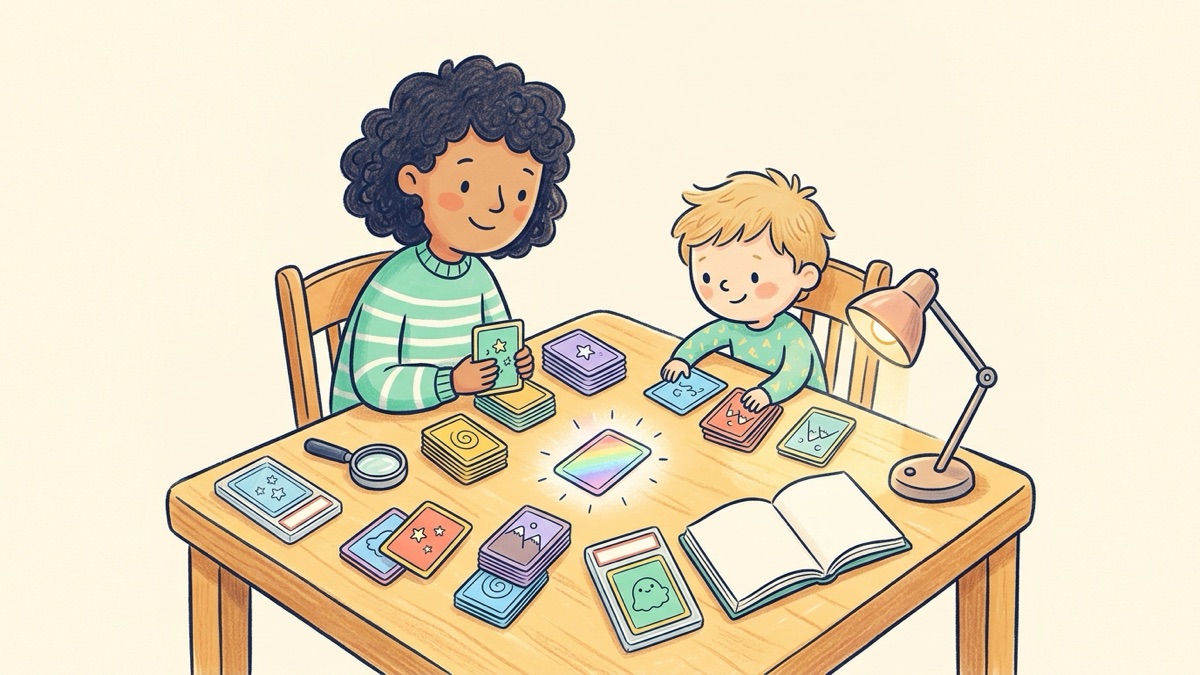
Start with the clues printed right on the card. You need good light, clean hands and maybe your phone camera to zoom in.
1. Is there a 1st Edition stamp?
The early English sets from Wizards of the Coast had a first print run marked with a small black "Edition 1" stamp. On Pokemon cards it sits on the left side, just under the bottom corner of the picture. 1st Edition cards are typically worth more than the Unlimited prints that followed, and Base Set 1st Edition cards are regarded as the most valuable of them.
English 1st Edition runs stopped after Neo Destiny in 2002, and the reprint set Base Set 2 never had one. Our guide to 1st Edition Pokemon cards lists every set and shows how to spot a fake stamp.
2. Is it a Base Set card with no shadow?
Base Set came out in the US on January 9, 1999, and its second print is called Shadowless. It has no stamp and no drop shadow along the right side of the art box. Its HP and attack text is also thinner than on the Unlimited print that came next.
Shadowless cards look almost exactly like 1st Edition cards minus the stamp, and collectors seek them out, especially holos in high grade. If your Base Set card has a gray shadow hugging the right edge of the picture, you have the Unlimited print.
3. Does the picture shine?
A holo (short for holofoil) card has a shiny, rainbow picture. In Base Set, the 16 holo rares are numbered 1 to 16 out of 102, and they were the cards every kid wanted in 1999.
Do not mix up a holo with a reverse holo. A reverse holo has the shine on the card's background instead of the picture, and English packs have included one since Legendary Collection in 2002. They are different versions with different prices, so always look up the exact one you have.
4. What rarity symbol is on the card?
Look at the bottom of the card, usually on the right. A circle means common, a diamond means uncommon and a star means rare.
Scarlet and Violet sets add more symbols. Two black stars mark a Double Rare, two silver stars an Ultra Rare, one gold star an Illustration Rare, two gold stars a Special Illustration Rare and three gold stars a Hyper Rare. A higher rarity means fewer copies in packs, which is a good start, not a price tag.
5. Is the card number bigger than the set total?
Find the number at the bottom, like 58/102. When the first number is bigger than the second, like 101/100, you have a secret rare: a card numbered outside the set's printed size. Secret rares often come with special treatments such as rainbow foil, gold trim or shiny colors.
What makes a newer card valuable?
Modern cards can be worth money too. Here the clues are less about age and more about art, scarcity and how many collectors want the same card.
6. Is it full art or alt art?
A full art card has artwork that covers the whole card instead of sitting in a box at the top. Full art cards arrived in the Black and White era.
"Alt art" is collector talk for a card that also exists in a regular version but gets a different, often scene-style illustration. In Scarlet and Violet sets, Illustration Rares and Special Illustration Rares fill this role, showing Pokemon in their natural surroundings. These are often the cards people open packs hoping to find.
7. Is it a promo?
Promos come from events, tins, boxes and magazines, and they carry a Black Star Promo symbol at the bottom instead of a rarity symbol. Many promos were printed in big numbers and sell for very little. Others came from small events or contests and can be truly scarce. The promo symbol tells you to look it up, not to celebrate yet.
8. Is it a real error card?
A known, catalogued error can be worth more than the normal card. Early Base Set examples include Pikachu with red cheeks (found in the 1st Edition and Shadowless prints, while Unlimited only has yellow cheeks), a Shadowless Ninetales missing its attack damage, and the "Ghost Stamp" 1st Edition Pikachu whose stamp is missing parts of the lettering.
How big can the gap be? In June 2022, CGC reported that a Ghost Stamp Pikachu graded CGC 8 had sold for $900 on eBay in May 2022, while a non-error copy in the same grade was worth around $25 (both figures as of June 2022, per CGC). A gap like that is exactly why fakers copy errors too.
Heads up
Random printing flaws are not the same as famous errors. A miscut, a print line or an ink smudge usually counts against a card's condition or grade. If an "error" is not listed in a set guide such as Bulbapedia, treat it as a flaw until you can prove otherwise.
9. Is it a Japanese exclusive?
Some cards were only ever released in Japan: contest prizes, magazine promos and event cards. Japanese and English versions of the same card also sell for different prices, so always compare like with like.
Fun fact
The most famous Japanese exclusive is Pikachu Illustrator, a prize for winners of a 1998 illustration contest. Guinness World Records lists a PSA Gem Mint 10 copy as the most expensive trading card ever sold at auction: $16,492,000 through Goldin Auctions on February 16, 2026 (as of February 2026). Your Japanese binder almost certainly does not hold that card, but it shows why Japanese cards deserve a real look.
10. Which era is it from?
The Wizards of the Coast years, from Base Set in 1999 until their license ended in 2003, carry the most nostalgia for people who opened those packs as kids. Many of those cards were played with, traded and stuffed in pockets, so clean copies are the ones collectors hunt.
Nostalgia is not a fixed rule, though. Every era has favorite sets and favorite Pokemon, and a popular character from a newer set can outsell a forgotten one from an older set.
Why do condition and grade matter so much?
Two copies of the exact same card can sell for very different prices. The difference is usually condition, and for the best copies, a grade.
11. What condition is it in?
Look at the corners (sharp or rounded?), the edges (any white specks?), the surface (scratches, dents or creases?) and the centering (are the borders even?).
Marketplaces sort raw cards into five condition labels: Near Mint, Lightly Played, Moderately Played, Heavily Played and Damaged. Our Pokemon card condition guide shows what each one looks like and how to check your own card with a desk lamp.
12. Is it graded, and what grade?
A graded card has been checked by a company such as PSA, CGC or SGC and sealed in a clear plastic case called a slab, with a grade from 1 to 10 on the label. A raw card is one that has not been graded. Buyers trust the number on the slab, so high grades on popular cards can sell for far more than the same card raw.
The top of the scale is tough. PSA describes a 10 as "a virtually perfect card", with front centering of about 55/45 or better. Our PSA grading scale guide explains every grade in plain words.
How do you check what a Pokemon card is really worth?
Here is the free method collectors use. It takes a few minutes and one bit of discipline: only trust sold prices.
- Identify the exact card. Write down the name, the card number (like 4/102), the set symbol, and any stamp or version (1st Edition, Shadowless, holo, reverse holo, promo).
- Search eBay for that exact card. Use the name, number and set together in the search box.
- Filter to sold items. Tick "Sold items" in the search filters or on eBay's Advanced Search page. Sold prices are what people really paid. Asking prices are just wishes.
- Match condition or grade. Compare a raw card with raw copies in similar condition, and a PSA 9 with other PSA 9s. A PSA 10 sale tells you nothing about your raw card with a bent corner.
- Look at several sales, not one. A single strange sale can be a mistake or a bidding war. Look for the typical price across recent sales.
- Cross-check on TCGplayer. TCGplayer's Market Price is built from recent sales on its marketplace, and its price points follow the condition and printing you select on the product page.
Heads up
TCGplayer itself explains that listed prices can sit far above real sale prices, because the fairly priced copies sell and the overpriced ones are left behind. If a card looks valuable only because of its asking prices, it probably is not.
Should you grade a card that might be worth money?
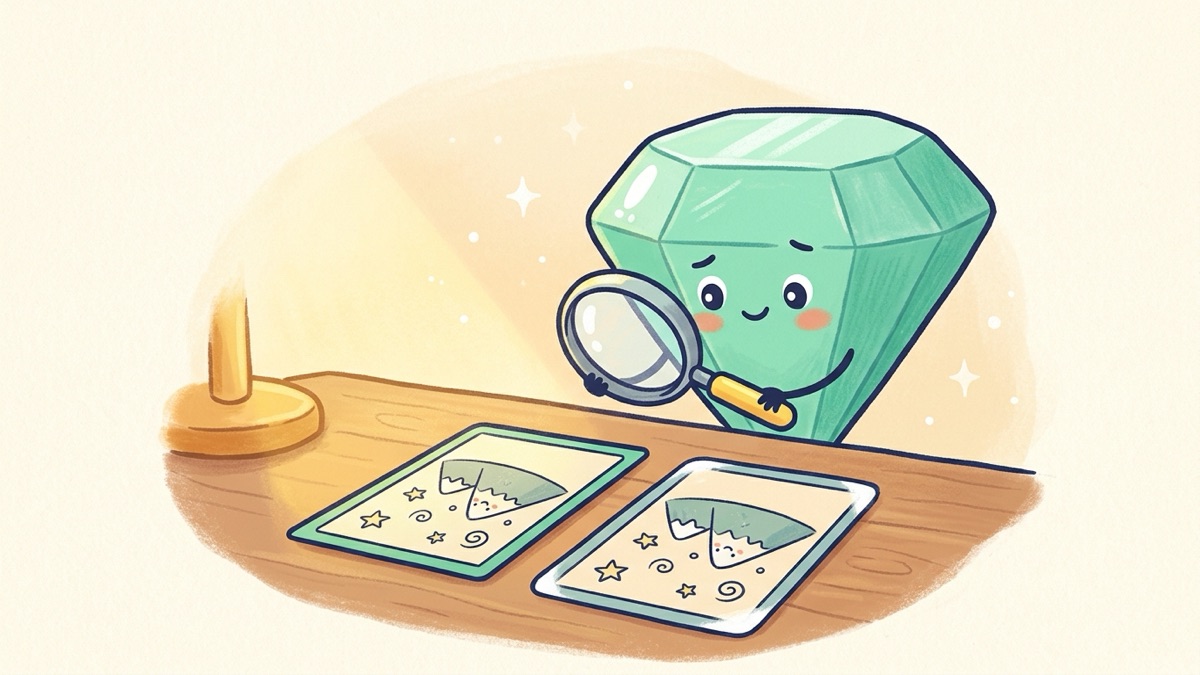
Only if the numbers work. As of September 2026, PSA's Standard service costs $59.99 per card, PSA's cheaper Value services were paused, and shipping comes on top. A card worth a few dollars raw will not turn into treasure just because it sits in a slab.
Grading makes the most sense for cards that are already valuable raw, look clean under a bright light, and would sell for clearly more in a high grade. Our guide to whether your card is worth grading walks through the decision, and how to grade Pokemon cards covers every step from sleeve to slab. No one can promise the grade a card will get, so plan with a range of outcomes, not just the best one.
Try it
Enter a card's raw value, a realistic graded value and the fee into the free grading cost calculator to see whether grading pays for itself before you ship anything.
So, is your Pokemon card worth money?
Run the twelve checks, and most cards will quietly tell you they are for fun, not for funds. That is a win too. The few that light up several clues at once are the ones to sleeve, look up by sold price and maybe grade.
Take it one card at a time, trust sold prices over asking prices, and enjoy the hunt. The MintGrade app, coming soon, will do the first pass from a single photo: a pre-grade estimate plus the card's raw and graded values.
MintGrade guides explain how grading works and help you decide what to submit. Only a grading company can assign a grade, and prices change daily, so check recent sold listings before you buy, sell or submit.
Questions collectors ask
Are old Pokemon cards worth anything?
Some are. Old cards are most likely to be worth money when they are holo rares, carry a 1st Edition stamp or come from the early Shadowless print of Base Set, and are in clean condition. Most old commons and uncommons sell for small amounts, so check sold listings for your exact card first.
How can I tell if a Pokemon card is rare?
Look at the symbol at the bottom of the card. A circle means common, a diamond means uncommon and a star means rare, and Scarlet and Violet sets add double stars and gold stars for higher rarities. A card number bigger than the set total, like 101/100, marks a secret rare.
What is the most expensive Pokemon card ever sold?
Guinness World Records lists a PSA Gem Mint 10 Pikachu Illustrator, a Japanese prize card from a 1998 illustration contest, which sold for $16,492,000 through Goldin Auctions on February 16, 2026.
How do I check what my Pokemon card is worth for free?
Search the exact card on eBay, turn on the Sold items filter and compare copies in the same condition or grade. TCGplayer's Market Price, which is built from recent sales on its marketplace, is a second free check for raw cards.
Is every 1st Edition Pokemon card worth a lot?
No. The stamp usually adds value compared with the Unlimited print of the same card, but a 1st Edition common in played condition can still be worth very little. The card, the set and the condition decide the price together.
Where these facts come from
- Bulbapedia: 1st Edition (TCG): bulbapedia.bulbagarden.net/wiki/1st_Edition_(TCG)
- Bulbapedia: Base Set (TCG): bulbapedia.bulbagarden.net/wiki/Base_Set_(TCG)
- Bulbapedia: Rarity: bulbapedia.bulbagarden.net/wiki/Rarity
- Bulbapedia: Full Art card (TCG): bulbapedia.bulbagarden.net/wiki/Full_Art_card_(TCG)
- Bulbapedia: Illustration rare card (TCG): bulbapedia.bulbagarden.net/wiki/Illustration_rare_card_(TCG)
- Bulbapedia: Pikachu (Base Set 58): bulbapedia.bulbagarden.net/wiki/Pikachu_(Base_Set_58)
- CGC: Counterfeit Card Alert, Ghost Stamp Error Pikachu (June 2022): www.cgcgrading.com/news/articles/ghost-stamp-pikachu-C6MYuzqB6I2ZGNtmtvwiw/
- Guinness World Records: Most expensive trading card sold at auction (overall): www.guinnessworldrecords.com/world-records/782465-most-expensive-trading-card-so
- TCGplayer: What do the different price points on TCGplayer.com mean?: help.tcgplayer.com/hc/en-us/articles/222376867-What-do-the-different-price-point
- eBay Advanced Search: www.ebay.com/sch/ebayadvsearch
- PSA grading standards: www.psacard.com/gradingstandards
- PSA trading card grading services and pricing: www.psacard.com/services/tradingcardgrading
Read next


grading costs
Is My Card Worth Grading? A 5-Minute Check

grading basics
What Is a PSA 10? The PSA Grading Scale Explained