Blog card value
Are Japanese Pokemon Cards Worth More Than English?
You pulled a stunning card from a Japanese pack, or traded for a stack of Japanese cards, and now you are wondering if you are holding the better version. Collectors argue about this at every card show. The honest answer is more interesting than a plain yes or no.
Quick answer
Sometimes. For many modern sets, Japanese copies sell for less, because Japanese packs have been cheaper and some high rarities are easier to pull. Japanese cards tend to win when they are Japanese exclusives, early Japanese prints or cards Japanese collectors love. Compare sold prices for the same card, language and grade.
Key takeaways
- Neither language is always worth more. The price depends on the exact card, how easy it was to pull and who wants it.
- Japanese sets usually come out first and are smaller. English sets often combine cards from more than one Japanese set.
- Japanese cards have a different back, use letter codes like SAR for rarity, and already had gray borders when English cards switched from yellow in 2023.
- Japanese exclusives and early Japanese prints can be worth far more than their familiar English cousins.
- PSA and CGC grade Japanese cards on the same scale, so the grading math works the same way.
Are Japanese Pokemon cards worth more than English?
There is no single winner. Each language has its own set list, print runs, pull rates and fans, so the same Pokemon with the same art can sell for quite different prices in each.
Here is a quick way to think about it:
| Kind of card | Where demand tends to be stronger | Why |
|---|---|---|
| Modern chase card with the same art in both languages | Often English | Japanese packs have been cheaper and some rarities pull more often |
| Japanese exclusive promo or prize card | Japanese | There is no English version to chase |
| 1990s first prints | Both, for different cards | English has 1st Edition and Shadowless Base Set; Japanese has the No Rarity Base Set |
| Trainer full art and illustration cards | Often Japanese | Recent top Japanese cards have often been Trainers |
| Pokemon-focused chase cards | Often English | Recent top English cards have often been Pokemon |
Treat this as a starting point, not a price guide.
Why do Japanese and English cards sell for different prices?
It comes down to supply and demand, driven by three things.
Pull rates. A card can be easier to pull in one language even at the same printed rarity. TCGplayer's example from the 151 set: an English Illustration Rare turned up in about one of every 12 packs, while the Japanese equivalent, called an Art Rare, turned up in about one of every seven.
Pack size and price. TCGplayer also noted that a Japanese 151 pack held seven cards and cost much less in Japan than a 10 card English pack cost in the US. Cheaper packs plus better odds put more copies on the market, and more copies usually means lower prices.
Taste. The two markets chase different things. TCGplayer reported that the priciest cards in recent English sets tended to be Pokemon, while the priciest in recent Japanese sets tended to be Trainer cards with popular characters.
Demand also shifts over time. In December 2025, CGC wrote that Japanese cards had become popular with collectors as English cards got harder to afford, and that many Japanese sets were arriving for grading.
When is a Japanese card worth more?
Japanese cards tend to shine in three situations.
It never came out in English
Japan has a long history of contest prizes, event cards and magazine promos that were never printed in English. The most famous is Pikachu Illustrator, a prize from a 1998 illustration contest. Guinness World Records lists a PSA 10 copy as the most expensive trading card ever sold at auction: $16,492,000 through Goldin Auctions on February 16, 2026.
Smaller examples follow the same pattern. CGC reported that a 1999 Japanese Tropical Mega Battle participation prize Exeggutor, graded CGC Gem Mint 10, sold for $9,750 on Fanatics Collect on May 22, 2025. That is a lot of money for an Exeggutor. The price comes from scarcity, not from Exeggutor's fan club.
It is an early Japanese print
The card game started in Japan. Japanese Base Set came out on October 20, 1996, more than two years before English Base Set arrived on January 9, 1999. Every card in it exists with and without a rarity symbol, and the version without one is believed to be the earlier print. Collectors call it the No Rarity print.
That tiny missing symbol matters a lot. CGC reported two Japanese Base Set Charizard sales at Heritage Auctions, both graded CGC Gem Mint 10: a regular copy for $2,520 in November 2023, and a No Rarity copy for $57,500 in September 2023. These are past sales we checked as of September 2026, so read them as history, not as today's price.
Japan also had its own 1st Edition runs, from 2001 to 2016, with a different mark from the English stamp. Our 1st Edition Pokemon cards guide explains why a Japanese 1st Edition mark does not always mean the rarer print.
Japanese collectors love it
When Japanese fans chase a card harder than English fans do, the Japanese version can outsell the English one, even when both were printed at the same rarity. Popular Trainer cards are the classic example.

When is the English version worth more?
For many modern cards with the same art in both languages, the English copy sells higher, for the supply reasons above. English also has famous early prints of its own.
English Base Set came in a 1st Edition print and then a Shadowless print, both with no drop shadow beside the picture box, before the Unlimited print. Bulbapedia notes that the Shadowless print was exclusive to English Base Set: other languages printed their 1st Editions with the shadow. So if you want a Shadowless Charizard, only English will do. Our guide to Shadowless Pokemon cards shows how to spot one in seconds.
How can you tell a Japanese card from an English one?
Beyond the language, a few design details give it away fast.
| What to check | Japanese cards | English cards |
|---|---|---|
| Card back | Japanese design | A different, international design |
| Border in recent sets | Gray | Yellow until Scarlet and Violet (2023), gray since |
| Rarity marker | Letter codes such as C, U, R, RR, AR, SAR | Shapes: circle, diamond, stars |
| Set size | Usually smaller sets, released more often | Bigger sets that often combine Japanese sets |
| Holo foil in some eras | Reaches the border in the Black and White and Sun and Moon eras | Stays on the picture in those eras |
A few more details worth knowing:
- Set names differ. English Mega Evolution was built from two Japanese sets, Mega Brave and Mega Symphonia. Japanese VSTAR Universe is Crown Zenith in English. And the Japanese set Stellar Miracle (135 cards, July 2024) fed into the English set Stellar Crown (175 cards, September 2024).
- Rarity can change between languages. Bulbapedia notes that a card that is Common in Japanese may be Uncommon in English.
- Japanese cards are not tournament legal at Play! Pokemon Championship Series events, according to TCGplayer, since those events use the international card back.
Want to decode the letters? Our guide on how to tell if a Pokemon card is rare covers the clues, and our Pokemon card rarity symbols guide lines up each Japanese letter code with its English symbol.
Is Japanese print quality really better?
You will hear it at almost every card shop: Japanese cards come out of the pack cleaner and better centered. It may be true for some sets. But we could not find a grading company or marketplace that publishes numbers comparing the two languages, so treat it as hobby talk, not a rule.
What is documented is that the cards are made a little differently, like the foil that reaches the border in some Japanese eras. And printing slips can happen to any card. CGC, for example, treats sheet sticking, where freshly printed sheets stick together and scuff the surface, as damage when it grades.
Heads up
Do not pay extra for a Japanese card just because it "should" grade better. Look at the actual copy under a bright light, check the corners and edges, and measure the centering before you decide.
Should you grade Japanese Pokemon cards?
If the numbers work, yes. PSA and CGC both grade Japanese cards. The Pikachu Illustrator record above is a Japanese card in a PSA slab, and CGC tracks Japanese sets in its population report, such as its counts for Japanese Base Set Charizard.
PSA publishes one set of grading standards, not one per language: a PSA 10 needs about 55/45 centering or better on the front and 75/25 on the back. PSA's price list is based on the card's value and the speed you pick, with no separate price for Japanese cards. As of September 2026, PSA's Standard tier costs $59.99 per card for cards worth up to $1,000.
Two tips before you send anything:
- Compare graded sales in the same language. An English PSA 10 sale tells you little about a Japanese PSA 10 of the same card.
- Do the value math. A modern Japanese card that sells for a few dollars raw may not cover the fee even as a 10. Our guide to whether your card is worth grading walks through it.
Try it
Measure your borders with the free card centering calculator, then put the raw value, a realistic graded value and the fee into the grading cost calculator.
How do you check what a Japanese card is worth?
- Find the exact Japanese set and number. Japanese set names differ from English ones, so do not assume they match.
- Search sold listings with the word "Japanese", the Japanese set name and the card number.
- Use the right product line. On TCGplayer, Japanese cards sit in their own product line called Pokemon Japan, listed by their English card names.
- Match condition or grade, and look at several sales, not one.
For the full step-by-step method, see what Pokemon cards are worth money.
The bottom line
Japanese cards are not automatically worth more, and they are not automatically the budget option either. Modern Japanese copies are often cheaper, while exclusives, early prints and fan favorites can outsell their English cousins or have none at all. Look up the exact card in the exact language, compare like with like, and grade only when the math works. The MintGrade app walks you through the same checks: measure the centering on your own photo, check the corners, edges and surface under a lamp, and see whether grading pays off.
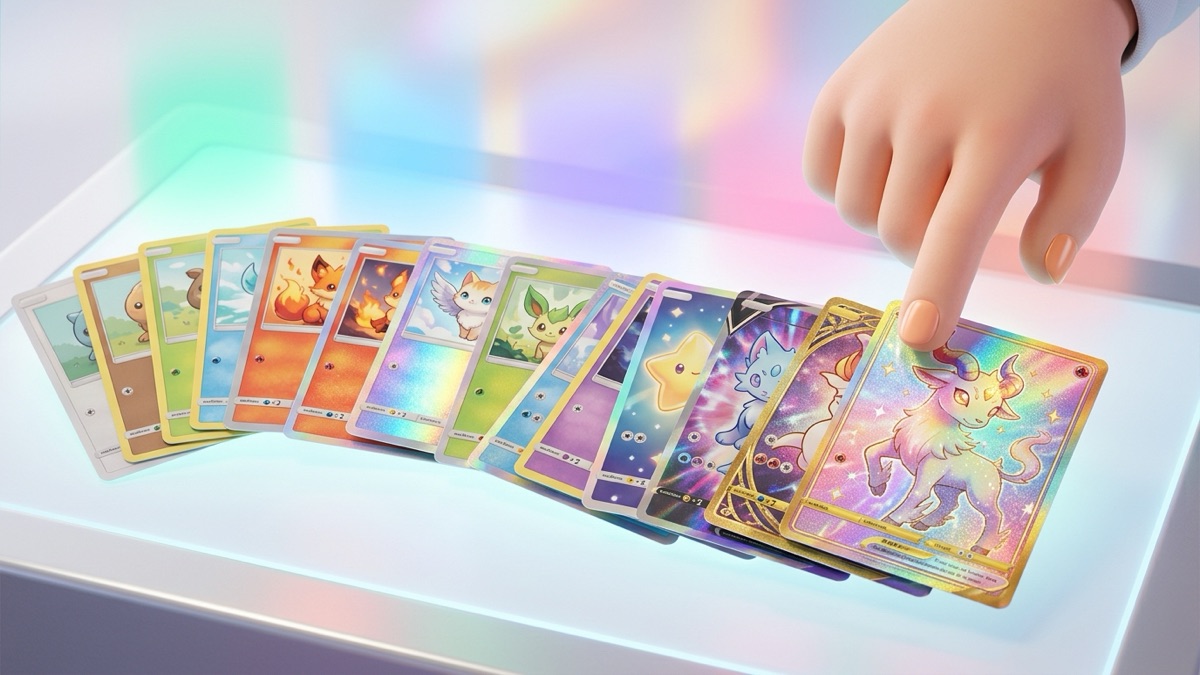
The pictures in this guide are AI-generated illustrations of what to look for, not photos of real graded cards. Any fee or price in it carries the month it was checked against the grading company's own page or recent sold listings (sources below). MintGrade guides explain how grading works and help you decide what to submit. Only a grading company can assign a grade, and prices change daily, so check recent sold listings before you buy, sell or submit.
Questions collectors ask
Are Japanese Pokemon cards worth more than English ones?
Not as a rule. For many modern cards the English copy sells higher, because Japanese packs have been cheaper and some high rarities easier to pull. Japanese exclusives, early Japanese prints and cards Japanese collectors love can be worth more. Compare sold prices for the same card, language and grade.
Why are Japanese Pokemon cards cheaper?
Often because more copies reach the market. TCGplayer has reported that some Japanese rarities pull more often than their English equivalents and that Japanese packs have cost less, so the same art can be easier and cheaper to find in Japanese.
Can you grade Japanese Pokemon cards with PSA or CGC?
Yes. Both PSA and CGC grade Japanese Pokemon cards on the same scale and standards they use for English cards. PSA's price list is based on the card's value and the speed you choose, not on its language.
How do I know if my Pokemon card is Japanese?
Besides the Japanese text, look at the back, which differs from the English back, and at the rarity marker. Modern Japanese cards show a letter code such as C, U, R, RR, AR or SAR near the card number, where English cards show a circle, diamond or stars.
Are Japanese Pokemon cards legal in tournaments?
Not at Play! Pokemon Championship Series events that use the international card back, according to TCGplayer. Japanese cards are fine for casual games and for collecting.
Where these facts come from
- TCGplayer Infinite: Japanese Pokemon Cards Are Now Available on TCGplayer (October 2024): infinite.tcgplayer.com/article/Japanese-Pok%C3%A9mon-Cards-Are-Now-Available-on-
- TCGplayer Infinite: Japanese Pokemon Card Rarities, Explained (October 2024): infinite.tcgplayer.com/article/Japanese-Pok%C3%A9mon-Card-Rarities-Explained/a42
- CGC: Hot List, top Japanese Pokemon TCG sets (December 2025): www.cgcgrading.com/news/articles/hot-list-top-japanese-pokemon-2XkDzl9xwnrlheAQU
- CGC: Card of the Month, 1996 Japanese Base Set Charizard (January 2026): www.cgcgrading.com/news/articles/card-of-the-month-apanese-charizard-6qQnnMLyTyH
- CGC: CGC-certified cards in May 2025 Fanatics Collect auctions (June 2025): www.cgcgrading.com/news/articles/cgc-certified-charizard-holo-realizes-90-000-in
- CGC: Clarifying its stance on sheet sticking (July 2025): www.cgcgrading.com/news/articles/cgc-clarifies-stance-on-sheet-sticking-and-pok-
- Pokemon.com: Scarlet and Violet revamps the Pokemon TCG card aesthetic (March 2023): www.pokemon.com/us/pokemon-news/pokemon-tcg-scarlet-and-violet-revamps-pokemon-t
- Bulbapedia: Base Set (TCG): bulbapedia.bulbagarden.net/wiki/Base_Set_(TCG)
- Bulbapedia: 1st Edition (TCG): bulbapedia.bulbagarden.net/wiki/1st_Edition_(TCG)
- Bulbapedia: Rarity: bulbapedia.bulbagarden.net/wiki/Rarity
- Guinness World Records: Most expensive trading card sold at auction (overall): www.guinnessworldrecords.com/world-records/782465-most-expensive-trading-card-so
- PSA grading standards: www.psacard.com/gradingstandards
- PSA trading card grading services and pricing: www.psacard.com/services/tradingcardgrading