Blog card value
How to Tell If a Pokemon Card Is Rare: Symbols and Clues
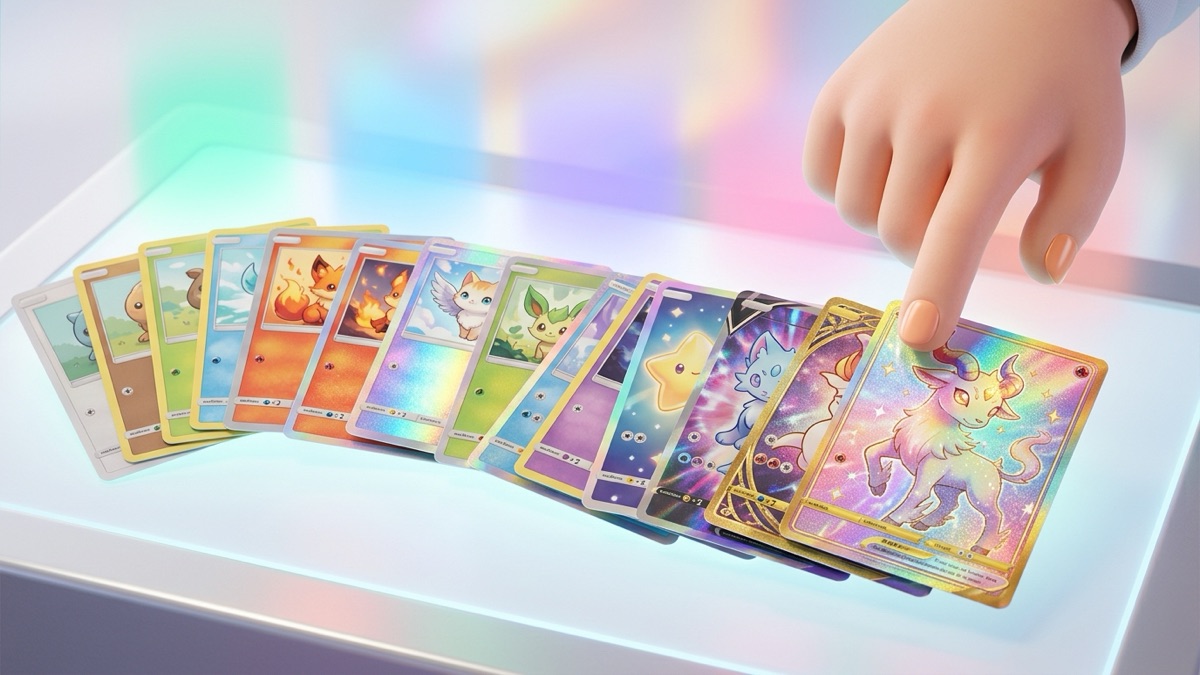
You just opened a pack, or dug out an old binder, and one card looks special. Maybe it shines, maybe the art covers the whole card, maybe there is a strange little symbol at the bottom. Here is how to read the clues like a pro, in about a minute per card.
Quick answer
Check the small symbol next to the card number: a circle is common, a diamond uncommon and a star rare. Newer cards use two black stars, two silver stars and one to three gold stars for higher rarities. A card number above the set total, like 107/105, marks a secret rare.
Key takeaways
- The rarity symbol sits next to the card number: usually bottom right on older cards, bottom left on modern cards such as Scarlet and Violet.
- Circle, diamond and star mean common, uncommon and rare. Since 2023, extra stars in black, silver and gold mark the higher rarities.
- A card number higher than the set total means a secret rare, the hardest pulls in most sets.
- Holo, full art, alternate art, promo stamps and special card types are all extra clues.
- Rare is not the same as valuable. Age, the Pokemon on the card, demand and condition all matter too.
Where is the rarity symbol on a Pokemon card?
Look at the bottom of the card, right next to the card number (written like 58/102). CGC notes the symbol sits in either the bottom right or bottom left corner. Older cards usually have it on the right. Modern cards, including every Scarlet and Violet card, have it on the left.
The symbol can be black or white depending on the background, and on some shiny cards a silver star almost disappears into a white border. TCGplayer's tip: if you cannot read it, look the card up in the official Pokemon card database.
A few cards have no rarity symbol at all. Basic Energy cards have none, and neither do some special releases.
What do the rarity symbols mean?
Here are the ones you will see most, from least to most rare within a set. Promos sit outside that ladder.
| Symbol | Rarity | Used on |
|---|---|---|
| Circle | Common | All eras |
| Diamond | Uncommon | All eras |
| Star | Rare (and, before 2023, higher rarities too) | All eras |
| Two black stars | Double Rare | Scarlet and Violet onward |
| Two silver stars | Ultra Rare | Scarlet and Violet onward |
| One gold star | Illustration Rare | Scarlet and Violet onward |
| Two gold stars | Special Illustration Rare | Scarlet and Violet onward |
| Three gold stars | Hyper Rare | Scarlet and Violet sets |
| Star with the word PROMO | Promo | All eras |
The big catch is the old single star. Before 2023, TCGplayer explains, a star could mean a plain Rare, a Holo Rare, an Ultra Rare or one of several special types. So on older cards, the star tells you "at least rare", and the other clues below do the rest.
Newer sets keep adding symbols, such as the gold star outlined in black for Mega Hyper Rare cards. Our Pokemon card rarity symbols guide has the full chart, including Japanese letter codes.
Fun fact
Since Scarlet and Violet, every Rare in an English pack is holo. Before that, a Rare could come with or without foil, and the holo version was the prize.
Is the card number higher than the set total?
This is the quickest money clue in the hobby. The card number reads like 58/102: card 58 of a set advertised as 102 cards. When the first number is bigger than the second, like 107/105, the card is numbered outside the set. That is a secret rare.
TCGplayer's classic example is Shining Charizard, numbered 107/105. In modern sets, secret rares are usually the special versions: full art cards, gold cards, rainbow cards and the illustration rares collectors call alt arts. CGC calls secret rares the hardest cards to pull in any set.
Is it holo, reverse holo or full art?
Foil helps, but only if you know which kind you have.
- Holo: the shine is only in the picture box. CGC notes holo versions are much harder to pull than reverse holos.
- Reverse holo: the shine covers the card except the picture. Bulbapedia says English packs have included one in every pack since Legendary Collection (2002), and they come in commons and uncommons too. So a reverse holo alone is not a sign of rarity.
- Full art: the artwork covers the whole card instead of sitting in a box. CGC says full art cards arrived in Black and White and are usually ultra rare or better.
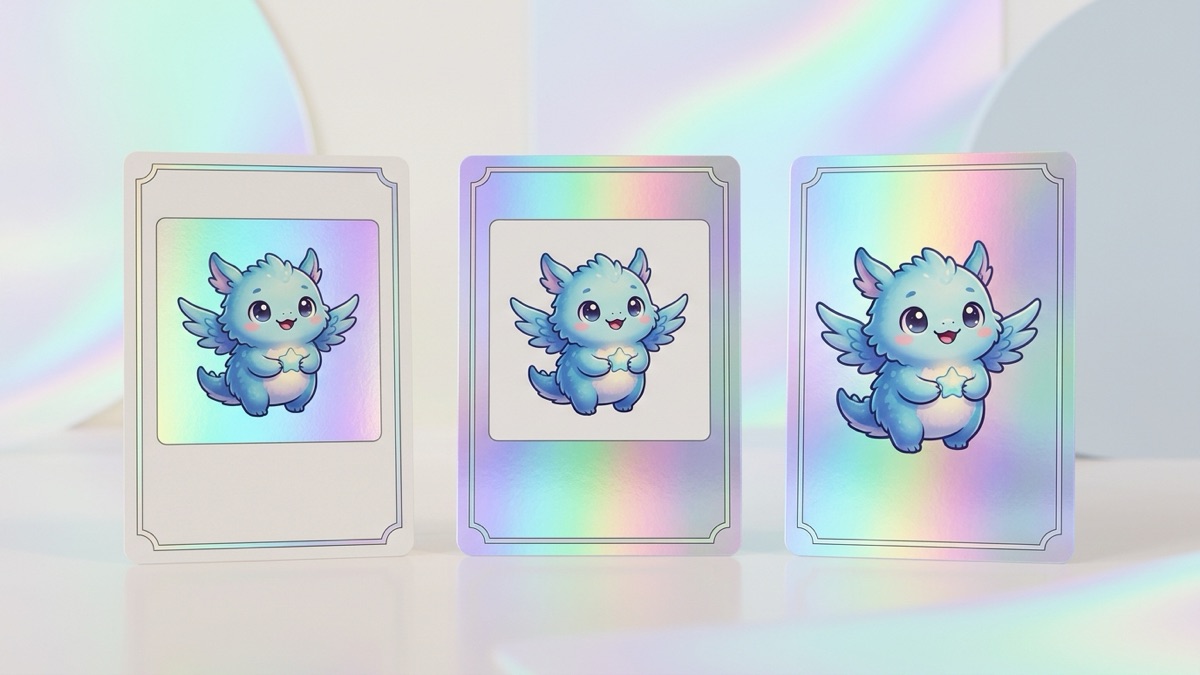
The holo pattern can also date a card. Bulbapedia lists a few well known ones:
| Era | Holo pattern on the picture |
|---|---|
| Base Set, Jungle, Fossil | Starlight: small stars, slightly blurry |
| Base Set 2 to Call of Legends | Cosmos: dots, circles and swirls |
| Black and White era | Tinsel: horizontal stripes |
| Sun and Moon era | Water-Web: a wavy pattern |
| Scarlet and Violet era | Mirage, with silver holo borders on holo rares |
Bulbapedia notes cosmos is now used a lot on promo cards, so a cosmos pattern on a modern card can point to a promo version.
Is it an illustration rare or alternate art?
"Alt art" is collector slang for a special version whose artwork appears on no other card, usually a full scene rather than the Pokemon on a plain background. Since Scarlet and Violet, most of these carry an official rarity: Illustration Rare (one gold star) for regular Pokemon, and Special Illustration Rare (two gold stars) for Pokemon ex and Supporter cards. Pokemon.com describes them as full-art foil illustrations that show a character's personality or surroundings.
These are the cards many collectors open packs hoping to find.
Is it a promo or a stamped card?
Promos come from events, boxes, tins and giveaways, not regular packs. Many carry a black star with the word PROMO instead of a rarity symbol. How rare a promo is depends entirely on how it was handed out: some were printed for every copy of a popular box, others for a single small event.
Watch for stamps, too. CGC notes that tournament promos carry a stamp showing the event and year, and some can be worth hundreds of dollars or more. Early English cards also have the 1st Edition stamp, and early Base Set cards may have no drop shadow beside the picture. Our guides to 1st Edition cards and Shadowless cards show how to check both.
What does not make a card rare?
A few things look important but are not rarity clues:
- The regulation mark. Modern cards show a small letter such as H, I or J near the bottom. Pokemon.com explains it tells tournament players whether a card is legal, not how rare it is.
- Reverse holo shine by itself. Every pack has one.
- A random printing flaw. A miscut or ink smudge usually counts against a card's condition. Only known, catalogued errors add value.
- The language alone. Japanese cards use letter codes instead of symbols, and their prices follow their own market. See Japanese vs English Pokemon cards.

Is a rare Pokemon card always worth money?
No, and this is where many people get tripped up. CGC points out that a card's printed rarity does not always match its real scarcity. TCGplayer adds that rarity only compares cards within the same set: an old common like Base Set Pikachu can be worth more than a recent Ultra Rare of a less popular Pokemon.
So treat rarity as the first filter, then check the rest:
- Condition. Sharp corners, clean edges and a clean surface can change the price more than the symbol does.
- The Pokemon. Fan favorites sell for more than forgotten ones at the same rarity.
- Sold prices. Look up recent sold listings for the exact card, version and condition. Our guide to what Pokemon cards are worth money shows the free method step by step.
Try it
If a rare card looks clean and sells well, put its raw value, a realistic graded value and the fee into the free grading cost calculator before you pay to grade it.
The short version
Read the symbol, check the number against the set total, then look at the foil, the art and any stamps. Those clues tell you how rare a card is within its set. Condition and real sold prices tell you what it is worth. The MintGrade app walks you through the same checks: measure the centering on your own photo, check the corners, edges and surface under a lamp, and see whether grading pays off.
The pictures in this guide are AI-generated illustrations of what to look for, not photos of real graded cards. Any fee or price in it carries the month it was checked against the grading company's own page or recent sold listings (sources below). MintGrade guides explain how grading works and help you decide what to submit. Only a grading company can assign a grade, and prices change daily, so check recent sold listings before you buy, sell or submit.
Questions collectors ask
How can I tell if my Pokemon card is rare?
Start with the small symbol next to the card number. A circle is common, a diamond is uncommon and a star is rare, and newer cards add double, silver and gold stars for higher rarities. Then check whether the card number is higher than the set total, which marks a secret rare.
What does a gold star on a Pokemon card mean?
On cards from Scarlet and Violet onward, one gold star means Illustration Rare, two gold stars mean Special Illustration Rare and three gold stars mean Hyper Rare. On older cards a single gold star marked a few special card types instead.
What does it mean when the card number is higher than the set number?
It is a secret rare. A number like 107/105 means the card is numbered beyond the set's advertised size. Secret rares are usually special versions such as full art, gold or rainbow cards.
Are all holo Pokemon cards rare?
No. Reverse holo cards, which shine everywhere except the picture, come in commons and uncommons too, and most packs contain at least one. A holo picture on a Rare, or foil across a full art card, is a better sign.
Does a rare card mean it is worth money?
Not always. Rarity only compares cards within the same set. Age, the Pokemon on the card, demand and condition matter just as much, so always check sold prices for the exact card before you get excited.
Where these facts come from
- Pokemon.com: Scarlet and Violet revamps the Pokemon TCG card aesthetic (March 2023): www.pokemon.com/us/pokemon-news/pokemon-tcg-scarlet-and-violet-revamps-pokemon-t
- Pokemon.com: 2026 Pokemon TCG Standard format rotation announcement: www.pokemon.com/us/pokemon-news/2026-pokemon-tcg-standard-format-rotation-announ
- CGC: Understanding Pokemon rarity symbols and card features (updated March 2026): www.cgcgrading.com/news/articles/pokemon-rarity-symbols-5eVJ014Vl6Zs4GDNfoG3YB/
- TCGplayer Infinite: How to tell the rarity of a Pokemon card (updated August 2025): infinite.tcgplayer.com/article/How-to-Tell-the-Rarity-of-a-Pok%C3%A9mon-Card/3bc
- TCGplayer Infinite: How Pokemon card rarities are changing in Scarlet and Violet (March 2023): infinite.tcgplayer.com/article/How-Pok%C3%A9mon-Card-Rarities-Are-Changing-in-Sc
- Bulbapedia: Rarity (holofoil patterns, reverse holos, promos): bulbapedia.bulbagarden.net/wiki/Rarity
- Bulbapedia: Base Set (TCG): bulbapedia.bulbagarden.net/wiki/Base_Set_(TCG)