Blog grading companies
PSA vs BGS: Beckett Subgrades vs the PSA Label
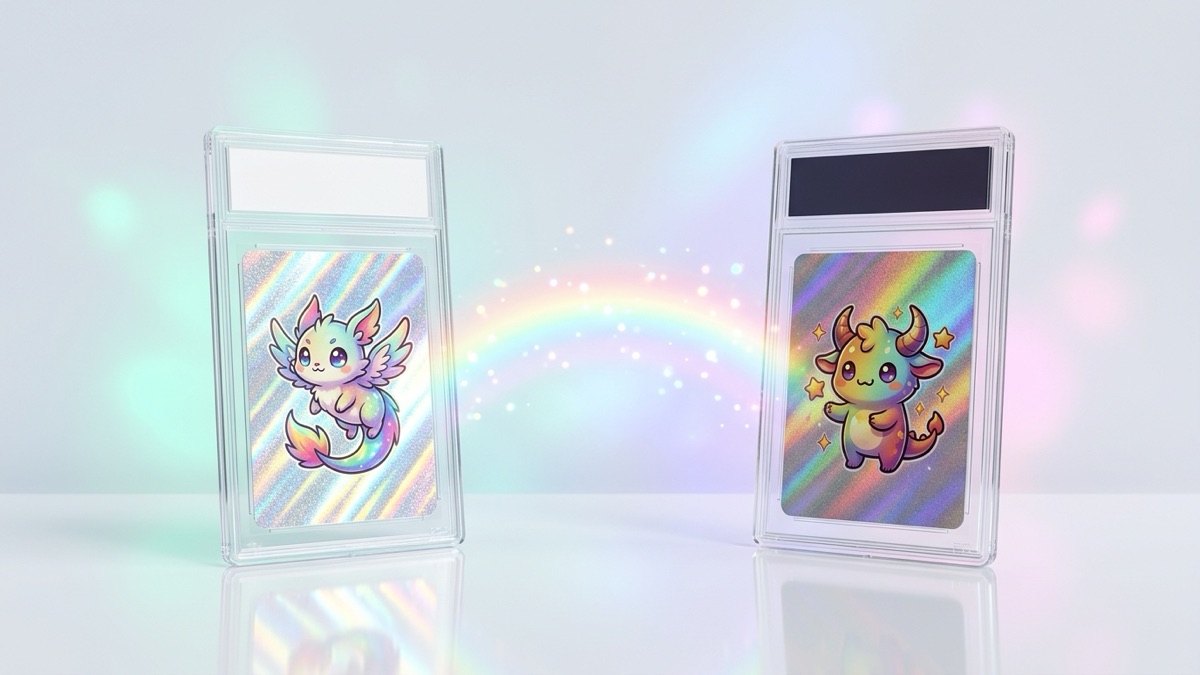
You have a card that looks close to perfect, and two very different slabs are calling its name. PSA gives it one big number. Beckett (BGS) gives it a number plus a little report card with four more numbers on it. Which one tells the better story, and which one sells?
Quick answer
PSA gives one overall grade and is the slab most buyers look for first, especially for modern Pokemon. BGS adds four subgrades (centering, corners, edges, surface) and a rare Black Label when all four are 10. A BGS 9.5 is Beckett's Gem Mint grade, with centering rules that are tighter than a PSA 10 on paper.
Key takeaways
- One number vs a report card. PSA prints a single grade. BGS prints an overall grade plus four subgrades, and it does not use qualifiers like PSA's OC.
- BGS 9.5 is Beckett's Gem Mint. Its published centering (50/50 one way and 55/45 the other on the front, 60/40 on the back) is stricter than PSA's 10 (about 55/45 front, 75/25 back).
- Black Label means four 10s. A BGS Pristine 10 with 10s in every subgrade gets a black label. It is Beckett's rarest look.
- Beckett is in a strange spot. As of September 2026, beckett.com was offline and only the $79.95 Express tier was open. PSA's cheapest open tier was Standard at $59.99.
- Resale leans PSA for most Pokemon, but there is no fixed gap. Check sold prices for your exact card in both slabs.
How are PSA and BGS different?
Both companies authenticate a card, grade it from 1 to 10 and seal it in a clear case. The difference is how much they tell you.
PSA gives one overall grade. If a card meets every standard for a grade except one, PSA can add a qualifier such as OC (off center) instead of dropping the number. On Express and higher tiers, PSA also includes Grader Notes that list the defects it found.
Beckett gives an overall grade in half-point steps and prints four subgrades on the label: centering, corners, edges and surface. Beckett says that with that report card, "there are no confusing qualifiers to decipher." Vintage cards from 1980 and earlier go through Beckett Vintage Grading (BVG) instead, which gives one overall grade without subgrades.
One family note: Collectors, the company behind PSA, announced a deal to buy Beckett in December 2025. It said Beckett would stay an independent brand with its own grading standards, so a BGS grade and a PSA grade are still separate things.
| Feature | PSA | BGS (Beckett) |
|---|---|---|
| Scale | 1 to 10, half points from 2 to 9, no 9.5 | 1 to 10 in half points, including 9.5 |
| Top grade | GEM-MT 10 | Pristine 10 (Black Label with four 10 subgrades) |
| Detail on the slab | One grade, plus a qualifier such as OC when needed | Overall grade plus four subgrades |
| Label colors | No color code by grade | Gold for 9.5 to 10, silver for 8.5 to 9, white below, black for quad 10s |
| Vintage | Same scale for every era | BVG for 1980 and earlier, no subgrades |
How do Beckett subgrades work?
A BGS grader scores four things, each on the 1 to 10 scale:
- Centering: how evenly the picture sits inside the borders, front and back.
- Corners: how sharp all four are.
- Edges: chipping, roughness or whitening along the sides.
- Surface: scratches, print spots, print lines and gloss.
Here is the part most people get wrong: the overall grade is not an average. Beckett's grading FAQ says the lowest subgrade matters most, because it is the most obvious defect. Two of Beckett's own examples show how it plays out:
- Centering 9.5, corners 9.5, edges 9, surface 8 comes out as an 8.5. The strong 9.5s lifted the card half a point above its weakest subgrade.
- Centering 9.5, corners 9.5, edges 8.5, surface 9 comes out as a 9. The card could only go half a point above its 8.5.
Beckett also says a Gem Mint 9.5 needs at least three 9.5 subgrades with the fourth no lower than 9. And the final grade "rarely, if ever" lands more than two steps above the lowest subgrade. Our BGS grading scale guide walks through every grade and its centering limits.

What is a BGS Black Label?
Beckett introduced the Black Label on November 28, 2014. Its announcement put it simply: a card that earns four 10 subgrades gets a special black label. It applies to modern cards only, not to vintage BVG cards.
That makes two kinds of BGS Pristine 10. A Pristine 10 without four perfect subgrades gets Beckett's gold label, the same color used for 9.5s. A Pristine 10 with a 10 in every subgrade gets the black one. Beckett calls that the quad-10 level, and it is the grade Beckett fans chase hardest.
PSA has nothing quite like it. Its top grade is GEM-MT 10, and since PSA gives no subgrades, there is no extra rung for a card that is perfect in every category.
Fun fact
Beckett's label color tells you the grade band from across the room: gold for 9.5 and 10, silver for 8.5 and 9, white for everything lower, and black for the quad 10s.
Is a BGS 9.5 the same as a PSA 10?
This is the question everybody asks, and the honest answer is "close, but not the same." BGS 9.5 is Beckett's Gem Mint grade, the step below its Pristine 10. PSA's Gem Mint grade is its 10. So the names line up, and the numbers do not.
On paper, the BGS 9.5 bar is higher for centering. These are the published figures (PSA from its standards page; Beckett from its scale page, read from an archived copy because beckett.com was offline in September 2026):
| Grade | Front centering | Back centering |
|---|---|---|
| PSA GEM-MT 10 | About 55/45 | 75/25 |
| BGS Gem Mint 9.5 | 50/50 one way, 55/45 the other | 60/40 |
| BGS Pristine 10 | 50/50 all around | 60/40 |
| BGS Mint 9 | 55/45 both ways | 70/30 |
Look at that last row: Beckett's Mint 9 asks for the same front centering as a PSA 10, with a tighter back. A Pokemon card with a lopsided back can be a fine PSA 10 candidate and still miss a BGS 9.5 on centering alone. For how to read these ratios, see our card centering guide.
A 9.5 also needs the subgrade mix described above, so one soft corner can hold it back even when the centering is perfect.
Try it
Measure both sides of your card with the free card centering calculator before you pick a grader. It runs in your browser and never uploads the photo.
Which sells for more, PSA or BGS?
For most modern Pokemon cards, PSA is the benchmark. Sports Illustrated reported that PSA handled 71.8 percent of the 26.8 million cards the major companies graded in 2025, and CGC 18.4 percent. That left under 10 percent for everyone else, Beckett included, so fewer buyers shop by BGS grade.
BGS has its own fans, though, and they pay attention to the top of the scale. A Pristine 10, and above all a Black Label, is a separate chase with its own buyers. A plain BGS 9.5 is where comparisons with a PSA 10 get murky, and the answer changes from card to card.
There is no fixed price gap in either direction. Anyone who quotes one number for every card is guessing.
Tip
Look up recent sold prices (not asking prices) for your exact card as a PSA 10, a BGS 9.5 and a BGS 10. While beckett.com is offline, Beckett's online pop report may not be available either, so marketplace sold listings are your best guide.
How much do PSA and BGS cost?
Prices below are as of September 2026. PSA's come from its own price page. Beckett's site was offline, so its figures come from Beckett's temporary submission form and status page, with paused-tier prices as reported.
| PSA | BGS | |
|---|---|---|
| Cheapest open tier | Standard, $59.99 (cards up to $1,000) | Express, $79.95 |
| Estimated turnaround for that tier | 90 to 100 business days | 15 business days |
| Paused tiers | Value tiers | Base ($17.95, or $14.95 without subgrades) and Standard ($34.95), reported |
| Faster options | Express $199, Super Express $349, Premier $599 | Priority $124.95 (reported, not open) |
Beckett's status page said Base and Standard were paused while it works through existing orders, with a waitlist to hear when they reopen. So for now, BGS's cheapest tiers are on hold, but its open tier is faster than PSA's cheapest one. Our Beckett grading cost guide and PSA grading cost guide break down every tier, and the free grading cost calculator adds up a whole box.
Who should pick PSA, and who should pick BGS?
Pick PSA if:
- You are grading modern Pokemon you might sell and want the biggest pool of buyers.
- You are matching a set that already lives in PSA slabs.
- You want the cheapest open tier as of September 2026 and can wait.
Pick BGS if:
- You want subgrades that show exactly where your card is strong and weak.
- Your card is so clean and well centered that Pristine 10 or a Black Label is a real possibility.
- You like Beckett's look and plan to keep the card.
Still weighing more graders? Our hub on PSA vs CGC covers the other big matchup, including where Beckett, SGC and TAG fit.
What should you check before sending to either?
Nobody can promise a grade, at PSA or at Beckett. What you can do is check the four things BGS scores out loud: centering front and back, corner sharpness, edge wear and surface scratches under a bright, tilted light. If one of them is clearly weak, a BGS subgrade will say so on the label forever.
The MintGrade app walks you through the same checks: measure the centering on your own photo, check the corners, edges and surface under a lamp, and see whether grading pays off.
PSA vs BGS comes down to what you want the slab to say. PSA says one trusted number that most buyers recognize. BGS says the number and the reasons behind it, with a black label waiting for the rare card that is perfect in every way. Measure first, check sold prices in both slabs, then pick the story you want to tell.
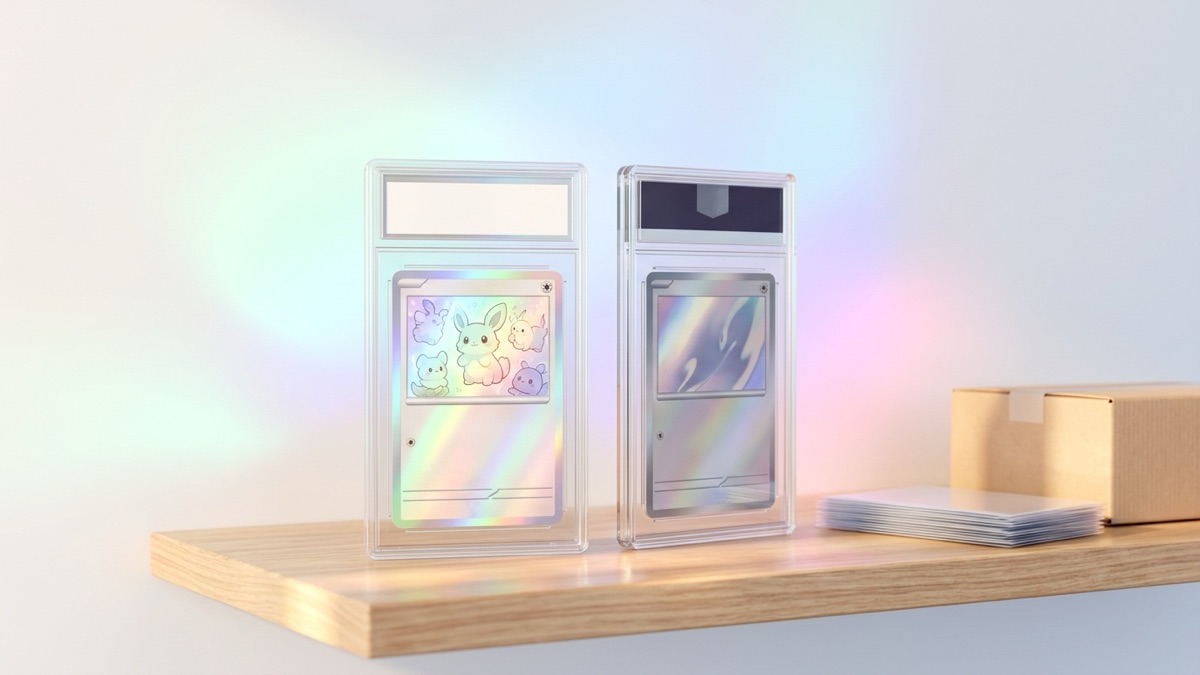
The pictures in this guide are AI-generated illustrations of what to look for, not photos of real graded cards. Any fee or price in it carries the month it was checked against the grading company's own page or recent sold listings (sources below). MintGrade guides explain how grading works and help you decide what to submit. Only a grading company can assign a grade, and prices change daily, so check recent sold listings before you buy, sell or submit.
Questions collectors ask
Is a BGS 9.5 the same as a PSA 10?
Not exactly. BGS 9.5 is Beckett's Gem Mint grade, and on paper its centering bar (50/50 one way and 55/45 the other on the front, 60/40 on the back) is tighter than PSA's 10. Sale prices still differ by card, so compare sold listings for both.
What is a BGS Black Label?
It is the label Beckett gives a Pristine 10 card that scored a 10 on all four subgrades: centering, corners, edges and surface. Beckett introduced it in November 2014 for modern cards only, not for vintage BVG cards.
Is BGS or PSA better for Pokemon cards?
For most modern Pokemon cards you plan to sell, PSA is the slab most buyers look for first. BGS suits collectors who want subgrades on the label or who have a near-perfect card with a real shot at Pristine or Black Label.
How much does BGS grading cost?
As of September 2026, Beckett's temporary submission form listed only Express, at $79.95 per card with an estimated 15 business days. Base and Standard were paused behind a waitlist, and beckett.com itself was offline.
Does PSA give subgrades?
No. PSA gives one overall grade from 1 to 10 and can add a qualifier such as OC for off center. Its Express tier and higher include Grader Notes that describe the defects the grader found.
Where these facts come from
- PSA grading standards: www.psacard.com/gradingstandards
- PSA trading card grading services and pricing: www.psacard.com/services/tradingcardgrading
- Beckett grading scale (archived copy of beckett.com, May 3, 2026): web.archive.org/web/20260503161916/https://www.beckett.com/grading/scale
- Beckett grading FAQ: how final grades are determined (archived copy, March 2025): web.archive.org/web/20250326181354/https://www.beckett.com/grading/faq
- About Beckett Grading Services: labels and report card (archived copy, July 2026): web.archive.org/web/20260710231321/https://www.beckett.com/grading/about
- Beckett: Introducing BGS Black (November 28, 2014, archived copy): web.archive.org/web/20260616175531/https://www.beckett.com/news/introducing-bgs-
- Beckett service status page (Base and Standard paused, beckett.com offline): maintenance.beckett.com/
- Beckett temporary card grading submission form: beckett.jotform.com/form/beckett-card-grading-submission
- Collectors announcement on acquiring Beckett (December 15, 2025): www.collectors.com/company-announcement
- Sports Illustrated: over 26 million cards graded in 2025: www.si.com/collectibles/over-26-million-cards-graded-in-2025-how-the-market-expl
Read next

grading companies
PSA vs CGC for Pokemon Cards: Which Should You Pick?
grading companies
SGC vs PSA: Which Grader Is Better for Your Cards?

grading companies
TAG Grading Explained: Scores, Cost and TAG vs PSA

grading companies
SGC Grading: Scale, Tuxedo Slabs and Who It Suits
grading costs
PSA Minimum Grade: What It Is and When to Use It