
PSA Pop Report: How to Read It and Why It Matters
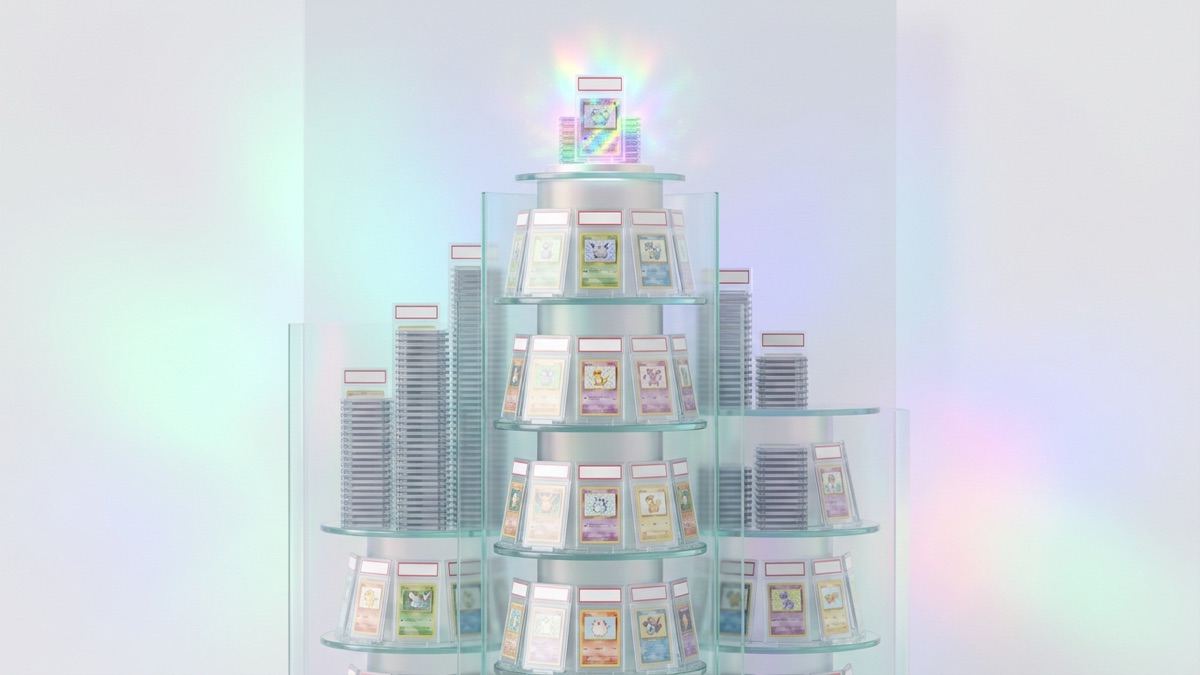
Two slabs of the same card, same grade, and one seller shouts "LOW POP!" in the title. Is that a reason to pay more, or just a sales pitch? The PSA pop report can tell you, once you know how to read it.
Quick answer
The PSA pop report (population report) counts every copy of a card PSA has graded, broken down by grade. Look up your card, then divide its PSA 10 count by the total graded to get the gem rate. A small count at the top grade can mean real scarcity, but only after you rule out the usual traps.
Key takeaways
- The pop report counts graded copies, not every copy ever printed. Most cards in binders and shoeboxes have never been graded.
- As of September 2026, PSA's pop report on its website asks you to sign in to a Collectors account first. The PSA app also shows pop data when you scan a card.
- Gem rate is PSA 10s divided by total graded. It tells you how hard a 10 is to get for that exact card.
- A low pop only moves the price when buyers want the card. New sets and cheap cards both produce low pops that mean very little.
- Slabs that were cracked open without the label going back to PSA stay in the count, so the same card can be counted twice.
What is the PSA pop report?
"Pop" is short for population. PSA keeps a running count of every card it has graded, card by card and grade by grade, and publishes it as the pop report. If you see "PSA 10, pop 20" in a listing, it means PSA's records show twenty copies of that exact card at a 10.
Quick vocabulary check. A "raw" card is one that has not been graded. A "slab" is the sealed plastic case a graded card comes back in. And the pop report only covers PSA. Other grading companies keep their own counts, so a card with few PSA 10s might have plenty of 10s at another company.
The numbers get big fast. In February 2026 PSA said it grades about 90,000 cards a day worldwide. Sports Illustrated, citing GemRate's year-end grading report, reported that PSA graded more than 11 million TCG cards in 2025, most of them Pokemon.
How do you look up a card in the PSA pop report?
On the website it takes four steps:
- Open psacard.com/pop. As of September 2026, the page first sends you to a sign-in screen for a Collectors account, the login PSA uses across its site. Creating one starts with just an email address.
- Pick the category, year and set. Pokemon lives under TCG cards. PSA's set names do not always match the box: the original Base Set is listed as "1999 Pokemon Game".
- Find your card. Search with the card number and the name together. A plain name search for a popular Pokemon returns a wall of results.
- Read across the row. Each card gets one row with a count under every grade.
There are two shortcuts. PSA's app has a card scanner and research tools that pull up population reports, recent sales and live listings from a photo of the card. And if you already hold a PSA slab, look up its certification number at psacard.com/cert: cert pages typically show the PSA population for that grade and how many copies graded higher.
Tip
Always check that the variety matches. "Holo", "1st Edition" and "Shadowless" copies of the same card each get their own row, and their pops can be wildly different.
How do you read the numbers in the pop report?
PSA's pop tables run left to right from the lowest grade to the highest, then a total. Here is what each column is telling you:
| Column | What it counts | What to look for |
|---|---|---|
| Auth | Copies PSA certified as genuine with no number grade | A few are normal; they are not part of the 1 to 10 story |
| 1 to 8 | Copies at each lower grade | Lots of low grades often means a card that was played with |
| 9 | Copies graded Mint | The pile a 10 has to stand out from |
| 10 | Copies graded Gem Mint | The scarcity number sellers quote |
| Total | Every graded copy | The bottom half of your gem rate math |
Half grades such as 8.5 are not lumped into the 8s. Collectors report they sit on a separate line marked with a plus sign under each card. Qualified grades need the same care: a PSA 8 (OC), meaning off center, sells for less than a plain 8, so compare like with like.
What is gem rate, and how do you calculate it?
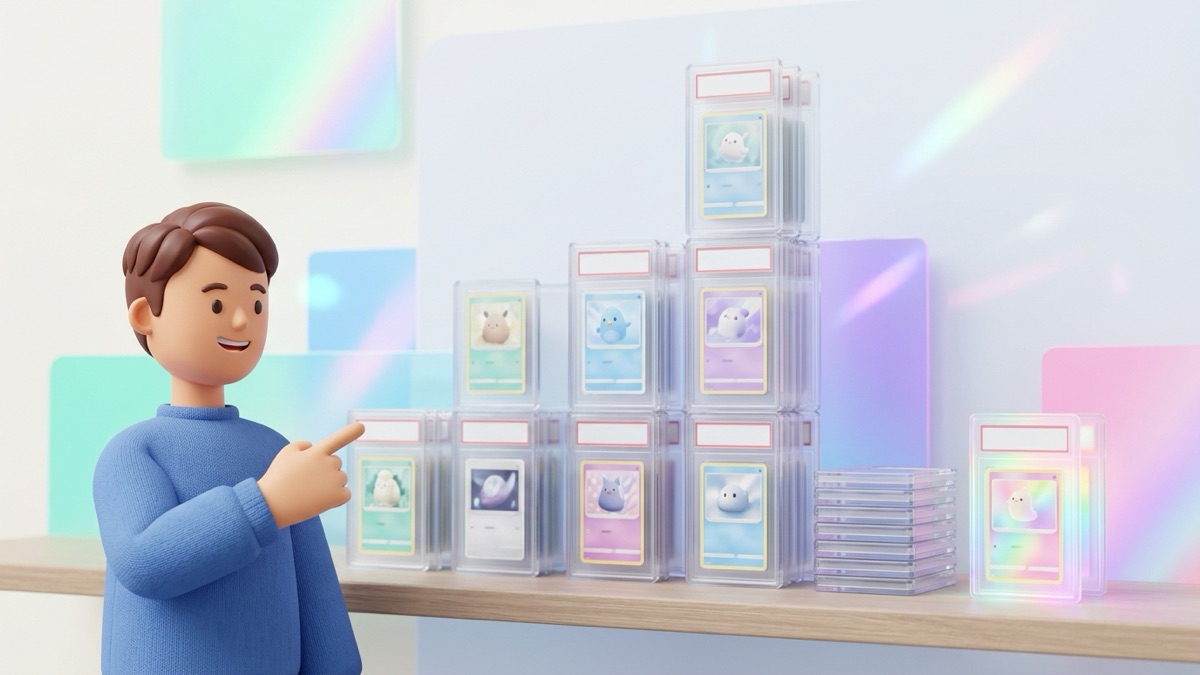
Gem rate is the share of graded copies that got a 10. The math is one line:
- Take the PSA 10 count.
- Divide it by the total graded.
- Multiply by 100.
A real example. When a 1999 German Base Set 1st Edition Holo Charizard in a PSA 10 sold at Fanatics Collect in September 2025, the listing said it had a PSA 10 population of 59 out of nearly 2,400 copies graded. That is 59 divided by 2,400, or about 2.5 percent. Fewer than 3 in 100 made it to a 10.
Now compare modern cards. Sports Illustrated reported, citing GemRate, that Pokemon cards graded by PSA in 2025 had a gem rate of roughly 50 percent, which added nearly 6 million PSA 10 Pokemon slabs to the market in a single year. Many modern cards go from pack to sleeve to grader in a few weeks, with almost no time to pick up wear.
So gem rate answers a practical question: how picky is this card? A low gem rate means centering, corners or print quality trip up most copies. A high one means a 10 is common and a 9 is the disappointment.
Why does a low pop matter for price?
Price comes from supply and demand, and the pop report is the closest thing collectors have to a supply count for each grade. When a popular card has many 9s and very few 10s, buyers who want the best copy compete for a handful of slabs. That competition is why the jump from a 9 to a 10 can be huge on tough cards and tiny on easy ones. Our PSA 9 vs PSA 10 guide digs into that gap.
Sellers know this, which is why that German Charizard's listing led with its pop. It sold for $17,400 including the buyer's premium in September 2025. The pop did not set that price on its own. Charizard, 1st Edition and a low gem rate all pulled in the same direction.
Two numbers are worth checking together: the pop at your grade, and the "pop higher" (copies graded above yours). A PSA 9 with none higher is the best copy anyone has had graded. A PSA 9 with thousands of 10s above it is a very different card.
What are the low pop traps?
A small number looks exciting. Before you pay extra for one, run through these.
Trap 1: the card is new
The pop report counts graded copies, not copies that exist. A card from a set that came out a few months ago can have a tiny pop simply because the grading queue has not caught up. Sports Illustrated reported that one 2025 Japanese McDonald's promo Pikachu was graded 58,000 times in December 2025 alone. Pops on modern cards can grow by thousands in a month.
Trap 2: cracked slabs still count
People crack cards out of slabs to resubmit them, hoping for a higher grade. PSA's terms ask anyone who breaks open a PSA holder to return the label and holder. If the label never goes back, the old grade stays in the count, and the resubmitted card adds a second entry. Our guide to PSA regrades and cracking slabs covers that choice.
Trap 3: PSA started noting the variety late
PSA's own pop pages carry a warning: for some sets, PSA began recognizing certain varieties long after it started grading them. Copies graded before that may be sitting under the plain version, so the variety's pop can look lower than it really is.
Trap 4: nobody bothered
Plenty of cards have low pops because they are not worth the fee to grade. A pop of 3 on a card that sells raw for pocket change is not scarcity. It is a shrug.
Heads up
"Low pop" in a listing title is marketing. Check the pop yourself, check the pop higher, and check what the same grade actually sold for, not what sellers are asking.
How can the pop report help before you grade?
Gem rate is a reality check for your own submission. If only a few percent of a card's copies reach a 10, plan your math around a 9 and treat a 10 as a bonus. If half of them reach a 10, a 9 may sell for little more than the raw card.
Fees matter here too. As of September 2026, PSA's cheapest open tier is Standard at $59.99 per card, and the cheaper Value tiers are paused. Our PSA grading cost breakdown covers every tier and the hidden costs.
Try it
Put your card's realistic graded value into the grading cost calculator and see whether the fees still make sense at a 9, not just at a 10.
Then check the flaws you can measure at home. Centering is the easiest: a PSA 10 needs about 55/45 or better on the front, and the card centering calculator measures it from a photo. Our PSA 10 requirements guide walks through corners, edges and surface, and the full walkthrough lives in how to grade Pokemon cards.
The bottom line on the PSA pop report
The pop report is a count of graded copies, grade by grade. Read it for the gem rate, the pop at your grade and the pop higher, then ask whether anyone actually wants the card. A low pop on a card people love is worth something. A low pop on a new or overlooked card is just a small number. The MintGrade app walks you through the same checks: measure the centering on your own photo, check the corners, edges and surface under a lamp, and see whether grading pays off.
MintGrade is made by Viral Labs and is not affiliated with any other app, price guide or grading company named here.
The pictures in this guide are AI-generated illustrations of what to look for, not photos of real graded cards. Any fee or price in it carries the month it was checked against the grading company's own page or recent sold listings (sources below). MintGrade guides explain how grading works and help you decide what to submit. Only a grading company can assign a grade, and prices change daily, so check recent sold listings before you buy, sell or submit.
Questions collectors ask
What does pop mean on a PSA card?
Pop is short for population: the number of copies of that exact card PSA has graded. A PSA 10 with a pop of 20 means PSA has given that card a 10 twenty times, as far as its records show.
Is the PSA pop report free?
PSA does not charge for it, but as of September 2026 the pop report on psacard.com asks you to sign in to a Collectors account before it shows numbers. The PSA app also shows population data when you scan or search a card.
How do you calculate gem rate?
Divide the number of PSA 10s by the total number of copies graded, then multiply by 100. A card with 59 tens out of 2,400 graded has a gem rate of about 2.5 percent.
Does a low pop always mean a card is valuable?
No. A low pop only helps the price when collectors want the card. Cheap cards often have low pops simply because few people pay to grade them, and new sets start with low pops that grow fast.
Do cracked PSA slabs come off the pop report?
Only if someone tells PSA. PSA's terms ask anyone who breaks open a PSA holder to return the label and holder. When that does not happen, the old grade stays in the count, so one card can be counted twice.
Where these facts come from
- PSA Population Report (asks for a sign-in as of September 2026): www.psacard.com/pop
- PSA pop report page for 1999 Pokemon Game: columns and variety note (Internet Archive capture, December 24, 2025): web.archive.org/web/20251224030857/https://www.psacard.com/pop/tcg-cards/1999/po
- PSA FAQ (PSA app scanner and research tools, cert verification): www.psacard.com/support/faq
- PSA certification verification: www.psacard.com/cert
- PSA: An Update on Pricing and Services (February 2026): www.psacard.com/info/submission-updates
- PSA Submission Services Terms and Conditions (Section 9, PSA holders): www.psacard.com/termsandconditions
- PSA trading card grading services and pricing: www.psacard.com/services/tradingcardgrading
- Sports Illustrated: Pokemon powers 2025, PSA's biggest grading year (January 2026): www.si.com/collectibles/pokemon-powers-2025-psa-s-biggest-grading-year-in-compan
- Fanatics Collect: 1999 German Base Set 1st Edition Holo Charizard, PSA 10 (sold September 2025): www.fanaticscollect.com/premier/6932e598-8db1-11f0-bbf0-0a58a9feac02
- Elite Fourum: where a PSA 8.5 shows up in the pop report (April 2024): www.elitefourum.com/t/where-would-a-psa-8-5-show-up-in-the-pop-report/47513
Read next
grading basics
How to Grade Pokemon Cards: A Step-by-Step Guide
grading basics
What Is a PSA 10? The PSA Grading Scale Explained
grading basics
PSA 10 Requirements: The Gem Mint Checklist
grading basics
PSA 9 vs PSA 10: Why One Point Changes the Price
grading companies
SGC Grading: Scale, Tuxedo Slabs and Who It Suits
care and storage
How to Store Pokemon Cards So They Stay Mint